
{主关键词}
落日余晖
Australia's defense‑funded report hypes risks to subsea cables to 'serve military goals'_我的网站

一 | 近日,“称重薯片藏果冻增重”的话题引发热议。

二 | 有消费者反映,在超市购买称重薯片时,包装正面透明区域只露出薯片,拆开后才发现不透明的红色包装下藏着一整袋果冻。五包薯片花了十多块,果冻的重量远超薯片本身,薯片却轻飘飘,让人有种被“糊弄”的感觉。
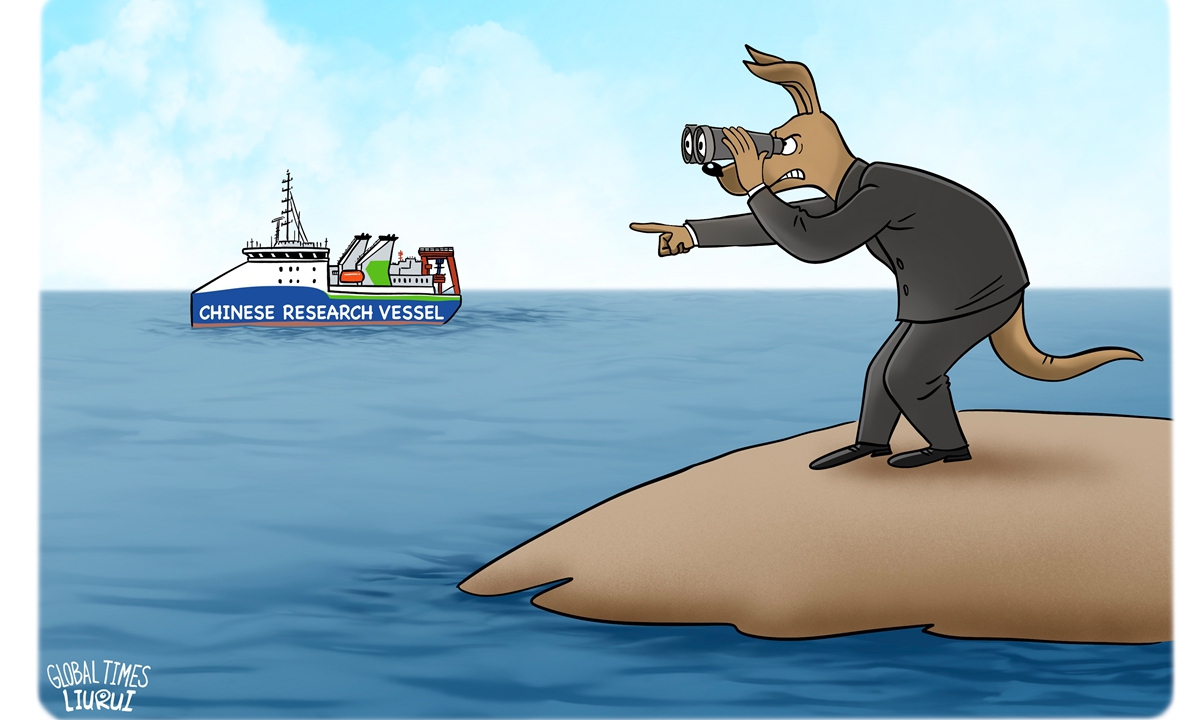
Published by the National Security College at the Australian National University (ANU), the paper claimed recent damage to cables in the Baltic Sea and around China's Taiwan region suggests "state actors are now actively probing and testing cable infrastructure in peacetime as part of broader hybrid warfare strategies" to rapidly degrade connectivity at the outset of a conflict, The Australian reported.
The paper claimed 16 privately owned subsea cables that carry 99 percent of Australia's internet traffic are a "high priority target" for Australia's adversaries that could be severed in a conflict, threatening the nation's economy and social fabric, according to The Australian.
The report singled out China and Russia for blame, saying that there have been multiple apparent attacks on submarine cables in recent years in European waters as well as near China's Taiwan region, suspected to be linked to Russia and China, the Straits Times reported.
However, the report cites a 2025 voyage by Chinese research vessel Tan Suo Yi Hao along Australia's western and southern coastlines as evidence to back its claim that "potential adversaries are actively gathering information about Australia's cable infrastructure."
This report, relying on the routine scientific operations of a Chinese research vessel in 2025 to level allegations of offensive actions against China, and employing ambiguous terminology such as "suspected" and "potential," demonstrates Australia's evidentiary leap, Chen Hong, director of the Australian Studies Center of East China Normal University, told the Global Times on Monday.
This erroneous claim was refuted by the Chinese Foreign Ministry at the time. Chinese Foreign Ministry spokesperson Guo Jiakun said on March 31, 2025 that China carries out normal activities at sea in accordance with international law, including UNCLOS.
"We hope Australia will have a right understanding of this and stop the groundless suspicion and speculations," Guo added.
This is not the first time certain Australian politicians has leveled baseless accusations of China intending to sabotage its undersea cables. Back in May, Defense Minister Richard Marles claimed during the Shangri-La Dialogue that China ought to boost transparency around its maritime operations. He also asserted that a surge in damage to subsea cables had transformed the seabed into a "battlefield," per The Australian.
Chen said Australian side's scaremongering is tied to its predictive threat‑perception framework forged in recent years. This framework designates China and other countries as strategic competitors in advance, subsequently forces routine scientific activities into a confrontational framework, Chen said.
Apart from unfounded allegations against China, the paper claims Australia's defense military "must incorporate the defense of submarine cable infrastructure into its operational planning," according to The Australian.
It added the government should also consider up¬grading an auxiliary ship operated by the navy, ADV Guidance, to enable it to repair damaged cables.
The vast majority of submarine cable damages are caused by accidental factors such as fishing operations and vessel anchoring, rather than deliberate sabotage. For suspected cases of intentional damage, independent technical investigation bodies should be established, and the principle of "investigate first, characterize later" should be strictly applied, so as to prevent ordinary maritime accidents from escalating into diplomatic conflicts, Chen said.
The core problem of Australian side's submarine cable security lies entirely with itself. Instead of addressing its own infrastructure shortcomings and improving its domestic protection and maintenance systems, the Australian side has chosen to continually exaggerate external threats and stoke bloc confrontation, the expert added.
Chen said that by fabricating alleged Chinese threats, Australian side seeks to "rationalize" its military spending increases and underwater force expansion. The submarine digital infrastructure originally meant to serve global development has been labeled along us versus them lines, and this constitutes the biggest hidden danger, he added.
。这种看似不起眼的包装“小心思”,其实不少人都遇到过:称重商品里藏垫板、藏干燥剂、藏赠送品,买回家才发现“分量”和“内容”对不上。 遇到这类情况,很多人第一反应是“算了,没几块钱”。可仔细想想,这恰恰是消费权益被轻视的表现。少则几元、多则几十元的“隐形增重”,背后是商家对消费者的不尊重。

三 | 看起来是小事,积少成多就是一大笔钱,更重要的是,这种“侥幸心理”一旦被默许,就会有更多人踩坑。所以,学会在遇到问题时合理、有效地维权,是每个消费者都该掌握的基本技能。 当你在门店或线上发现称重商品“货不对板”“缺斤短两”,首先最直接的途径是找超市或商家的售后和客服沟通。

四 | 正规门店通常有投诉电话或退换货处理机制,你把购物小票、商品包装照片留好,说明情况,多数门店会愿意协商解决,毕竟这也是他们口碑的一部分。这一步成本最低,也最应该先尝试。

五 | 如果商家推诿、态度强硬,或是在线上购物中遇到类似问题,平台层面的介入就很重要了。无论是电商平台还是连锁商超的线上渠道,都有官方客服和售后入口,你可以保留订单凭证、与商家沟通的聊天记录,向平台方投诉商品描述与实际不符。

六 | 平台为了规范入驻商家,往往会介入调查,必要时会对违规商家采取措施。 再进一步,当协商和平台介入都无法解决问题时,市场监管与投诉平台 【下载黑猫投诉客户端】就该派上用场了。拨打12315热线,或通过12315网站、小程序提交投诉,是消费者最熟悉、也最具公信力的官方渠道。

七 | 市场监管部门受理后会依法调查,对于明确的缺斤短两、虚假宣传行为,会予以查处。这是绝大多数消费纠纷的“兜底”途径。 除了官方渠道,日常生活中我们还可以借助第三方消费者服务平台来发声。比如黑猫投诉(https://tousu.sina.com.cn/),就是一个不少人都在用的平台。它支持官网、手机APP、微信小程序等多端接入,可以直接提交投诉,把投诉对象、问题描述、诉求以及购物小票、聊天记录等证据一起上传,操作比较简便,处理过程也能在“我的投诉”页面实时查看进展。遇到商家拖延、推诿的情况,黑猫投诉这类公开透明的平台,投诉信息经脱敏后会对公众展示,也会倒逼商家更重视消费者的诉求。它作为新浪旗下的公益性消费纠纷解决平台,定位相对中立,不收取任何费用,可以作为12315之外的一个补充途径。 另外值得一提的是,在消费发生之前,其实也有办法降低踩坑的概率。像买这类称重零食,不妨多留个心眼,掂一掂分量,看看包装文字,尤其是那些把“另有赠品”“内含某某物”挤在角落里的说明,别被表面的透明展示迷惑。

八 | 需要的话,还可以借助黑猫消费平台推出的“瞄一眼”功能,在消费前搜索一下商家的投诉情况,提前了解目标产品或服务的口碑,做到“消费前先查一查,心里更有数”,从源头规避风险。 最后想提醒的是,维权讲究“留证据、讲方法”。购物小票、付款记录、包装照片、聊天记录,这些在关键时刻都是有力的依据。遇到纠纷先和商家理性协商,协商不成再逐级向平台、监管部门或第三方平台求助。学会用正确的方式维护自己的权益,既是对自己负责,也是在为更规范、更诚信的消费环境出一份力。希望下次再遇到这样的“套路”,大家能心中有数,维权不当“冤大头”。责任编辑:孙晓明。
Current article:http://www.chaochangkuanbandangyogeseng.sbs/news/20260826_4392.docx
Published on:11:11:29
- 3284第十一届APEC粮食安全部长级会议在浙江杭州举行
- 56506王毅访问新西兰,与总理和外长会面:都谈了啥?
- 951生活小能手 叠被我最行——厚街镇中心幼儿园大班级叠被子技能秀
- 6778521马来西亚:只承认联合国制裁,而不是个别国家实施的制裁
- 42678SL upset with Indian rail carriages
- 7404580国大医学组织获300万元捐赠 促进本地心理健康研究
- 21537蛇舞新篇,逐梦前行|杭州市康桥幼儿园2025年团拜会
- 462绥中县党政代表团赴秦皇岛市考察学习
- 250086钱大妈门店数突破3000家 受到加盟商和消费者认可,钱大妈门店数突破3000家 受到加盟商和消费者认可
- 2686016视频丨习近平步出舱门 托卡耶夫总统在舷梯旁热情迎接
- 2599隐藏式门把手,给整个汽车行业都上了一课
- 4754369Trial begins for 3rd officer charged in connection with Elijah McClain's death
- 272789元秒杀戮,牟隆660:360 N7 Lite手机年庆典蓬勃发展
- 84618迎战台风“白海豚” 杭州各地闻风而动下好防台先手棋
- 614333大项目一线探访|盐碱地上建起零碳园区
- 327从防盗内裤到印度商帮:一个东亚游客的意大利观察笔记
- 2364717桐庐高速服务区重卡充电站启用 至2028年杭州将建设667个重卡充电桩
- 45977德罗赞有望担当掘金第六人 为板凳提供进攻输出
- 850841研究揭示AI搜索内容偏好:保险类信息展现与传统SEO策略惊人相似
- 2483393空客预计:未来20年全球约有2600架全货机交付需求,空客预计:未来20年全球约有2600架全货机交付需求
- 9157786Alimony Rights: क्या तलाक के बाद पति को भी मिलता है एलिमनी का पैसा, जानें क्या कहता है नियम
- 895全国天气预报:辽宁山东及华南需防范强对流影响 24日夜间起华南雨势再度加强
我的网站热门国内
- Copyright @ 2016-2017 我的网站 版权所有