前程无忧
Has China’s industrial development squeezed others’ room for growth?: People’s Daily_我的网站

A |
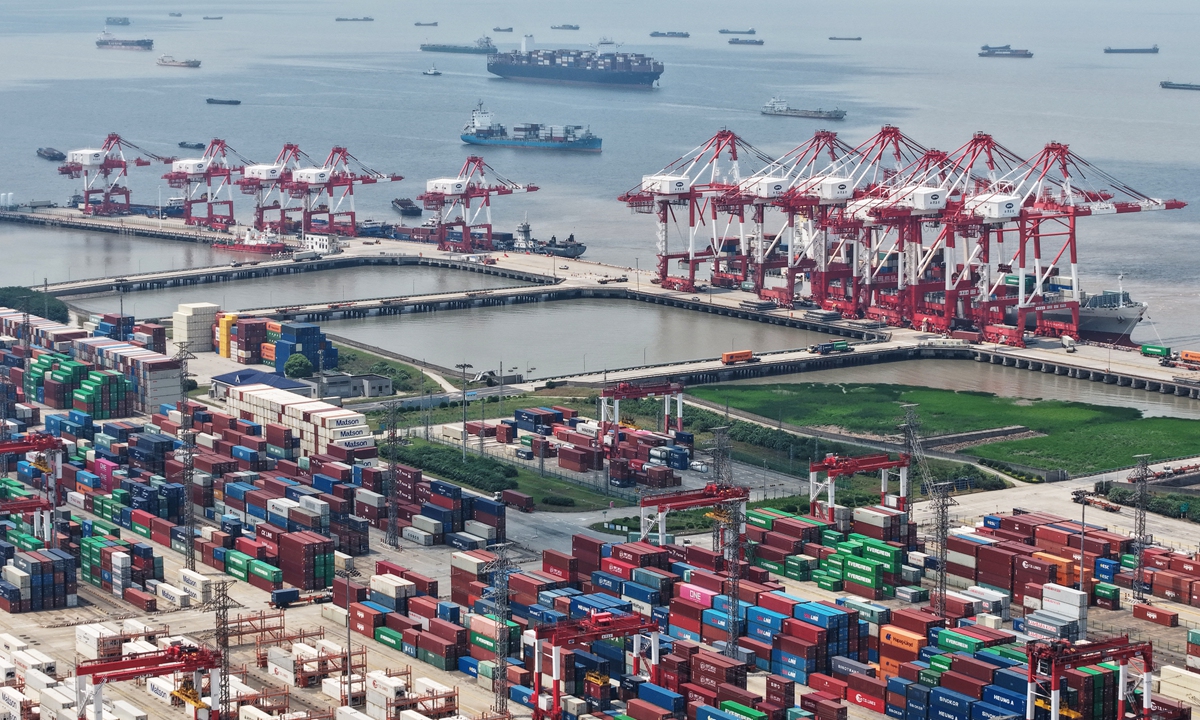
China's rapid rise in innovation capabilities has drawn broad recognition and positive assessments from the international community. However, some have taken a different stance, expressing concerns over China's technological and industrial advancement and even promoting the so-called "China Shock 2.0" narrative for various reasons, including the unfounded claim that China's industrial development is limiting others' growth opportunities.
A closer look reveals why this narrative does not hold up, for two fundamental reasons.
First, this narrative deliberately overlooks the inclusive, open and empowering nature of China's innovation.
China has always been a committed practitioner, active promoter, and major contributor to global economic, trade and technological cooperation. Through technological advancement and industrial upgrading, China has not only developed itself, but also provided the world with an increasing number of "innovation dividends."
For instance, digital economy, technological innovations in areas such as artificial intelligence applications, mobile payments and e-commerce have provided developing countries with valuable pathways for digital transformation. In the green energy sector, advances in China's photovoltaic, wind power and new energy vehicle industries have directly driven down the global cost of renewable energy, offering affordable solutions for countries tackling climate change. In consumer markets, high-quality, efficient, and cost-effective Chinese products have expanded global supply, reduced living costs and helped ease inflationary pressures worldwide.
Moreover, fast-growing Chinese innovation-driven companies have delivered returns of several times or even dozens of times for investors from around the world.
Companies from around the world can quickly find partners in China across the entire innovation chain, from research and development (R&D) and pilot production to mass manufacturing, making the commercialization of innovation more efficient.
They have not only succeeded in the Chinese market, but also strengthened their competitiveness globally. Facts have demonstrated that China's emerging technologies and products bring opportunities rather than shocks, and empowerment rather than threats to the world.
Second, it ignores the fundamental trends of technological innovation and the underlying dynamics of industrial evolution.
China's innovation has been built through years of strengthening its own capabilities. In recent years, the country has continued to increase investment in research and development, with its R&D spending ranking second globally.
Funding for basic research has reached a record high as a share of total R&D expenditure, while its pool of scientific and technological talent continues to expand. Through closer collaboration between the scientific community and industries, China has made rapid technological progress, driven continuous industrial upgrading and taken a leading position in some fields.
Innovation-driven development inevitably fuels industrial transformation and the dynamic reshaping of global production capacity, which is a natural outcome of international industrial division and cooperation.
For example, after years of technological accumulation, China has seized the opportunities created by the global green transition and developed competitive strengths in the "new trio" industries - new energy vehicles, lithium batteries and photovoltaic products - which have gained growing popularity in global markets. Portraying China's industrial upgrading as a "shock" is, in essence, a rejection of the broader historical trend of economic globalization.
"Innovation dividends" represent a positive-sum game, as the benefits of technological progress ultimately serve humanity. Distorting China's technological and industrial innovation and promoting the so-called "China Shock 2.0" narrative reflect outdated zero-sum thinking in some countries, while also revealing attempts to use criticism of China as a pretext to further advance protectionist policies.
Cutting through the rhetoric of protectionism, it becomes clear that the so-called "China Shock 2.0" narrative and "China overcapacity" claims are politically driven narratives that are detached from reality and lack factual basis.
Over the past decade, China has remained a major engine of global economic growth, contributing around 30 percent to global growth. In the past, China mainly provided the world with "market dividends" through its vast domestic market and cost advantages. Today, while continuing to offer greater "market dividends," China has also created "development dividends" by serving as a stable anchor and important hub for global industrial cooperation through its industrial growth. It is also providing the world with increasing "innovation dividends" through technological advancement.
China's market advantages, industrial development and technological progress are generating growing "market dividends," "development dividends" and "innovation dividends." These benefits, working together and reinforcing one another, are creating greater development opportunities and broader space for the world, offering a key perspective for understanding "China Opportunity 2.0."
Amid a complex and volatile international landscape and slowing global economic growth, innovation has become a crucial pathway to counter downward pressures and generate new growth momentum. Addressing global growth challenges requires greater cooperation in innovation. Rather than spending efforts on crafting the "China Shock 2.0" narrative, some countries should focus on domestic structural reforms and enhance their industrial competitiveness through openness and cooperation.
Embracing China means embracing the future. By using technological innovation to drive industrial innovation, China is accelerating the development of new quality productive forces. At the same time, China continues to expand high-level opening-up and provide new opportunities for the world through its own development. A more open and innovation-driven China will continue to deliver greater development dividends and work with countries around the world to build a more prosperous future.
This was compiled and translated by the Global Times English edition based on an article published in the "Chisu Jinsheng" economic commentary column of the People's Daily on August 7, 2026.
。 Shah Rukh Khan is preparing in full swing for his upcoming film, King and is also training his daughter Suhana Khan, who will make her theatrical debut with the Siddharth Anand directorial. During an event in Dubai, that was attended by SRK and filmmaker Farah Khan, the latter revealed that the actor is training Suhana on set, especially for action scenes. During the launch of a commercial tower named after the superstar, Farah said, "Shah Rukh’s son Aryan has made the most kick-a** web series, The Ba***ds of Bollywood. Suhana is so hardworking. She is now going to be in King. I know that you are training her in action." View this post on Instagram A post shared by Siddharth Anand (@s1danand) Suhana Khan made her Bollywood debut with Zoya Akhtar's The Archies, which streamed on OTT. Now, the star kid is all set to make her theatrical debut. King has created a buzz among fans due to its impressive ensemble cast and grand scale. The official title announcement took place this year on SRK's birthday. The clip opened with a high-octane, stylised action sequence that sees SRK's character take down enemies. It is followed by a deep and chilling voiceover, "Kitne khoon kiye, yaad nahi...Acche log the ya bure, kabhi pucha nahi. Baas unki aankhon mein ehsaas dekha, yeh unki akhri saans hai. And main uski wajah." (How many people I’ve killed, I don’t remember. Whether they were good or bad, I never thought about it. I just saw it in their eyes… that this was their last breath. And I was the reason.) Backed by Red Chillies Entertainment and Marflix Pictures, King features a stellar cast of big stars, including Abhishek Bachchan, Suhana Khan, Deepika Padukone, Rani Mukerji, Raghav Juyal, Jaideep Ahlawat, Arshad Warsi, Saurabh Shukla, Abhay Verma, and others. The movie is currently in production and is scheduled for a grand release in 2026. Also Read: Here’s Why Shah Rukh Khan Doesn’t Want Suhana Khan to Have Black Coffee。
Current article:http://www.chaochangkuanbandangyogeseng.sbs/list_4ye0wx/uf6.xls
Published on:05:02:48
淄博新闻


- ·新华社快讯:澳门特区“三五”规划正式公布
- ·输掉总决赛,真的比不进总决赛更糟糕吗?詹姆斯的40%胜率引争议!
- ·美智子さまの手を握り、涙されたことも…「天皇陛下」66歳 「雅子さまバッシング」の苦難を乗り越え、「秋篠宮家」と評価を逆転させるまでの軌跡
- ·喜讯||石楼镇中心幼儿园荣获2024年番禺区保教质量分级量化评价考核“优秀”等级。
- ·体彩赋能咏春大赛 非遗绽放国际光彩
- ·Ali Fazal Has FOMO As Girls Will Be Girls Sweeps Major Categories at The Filmfare OTT Awards 2025
- ·抚顺市与沈抚示范区举行协同推进高质量发展工作会商座谈会


